How engineers work with AI: from 200 papers to an answer in minutes
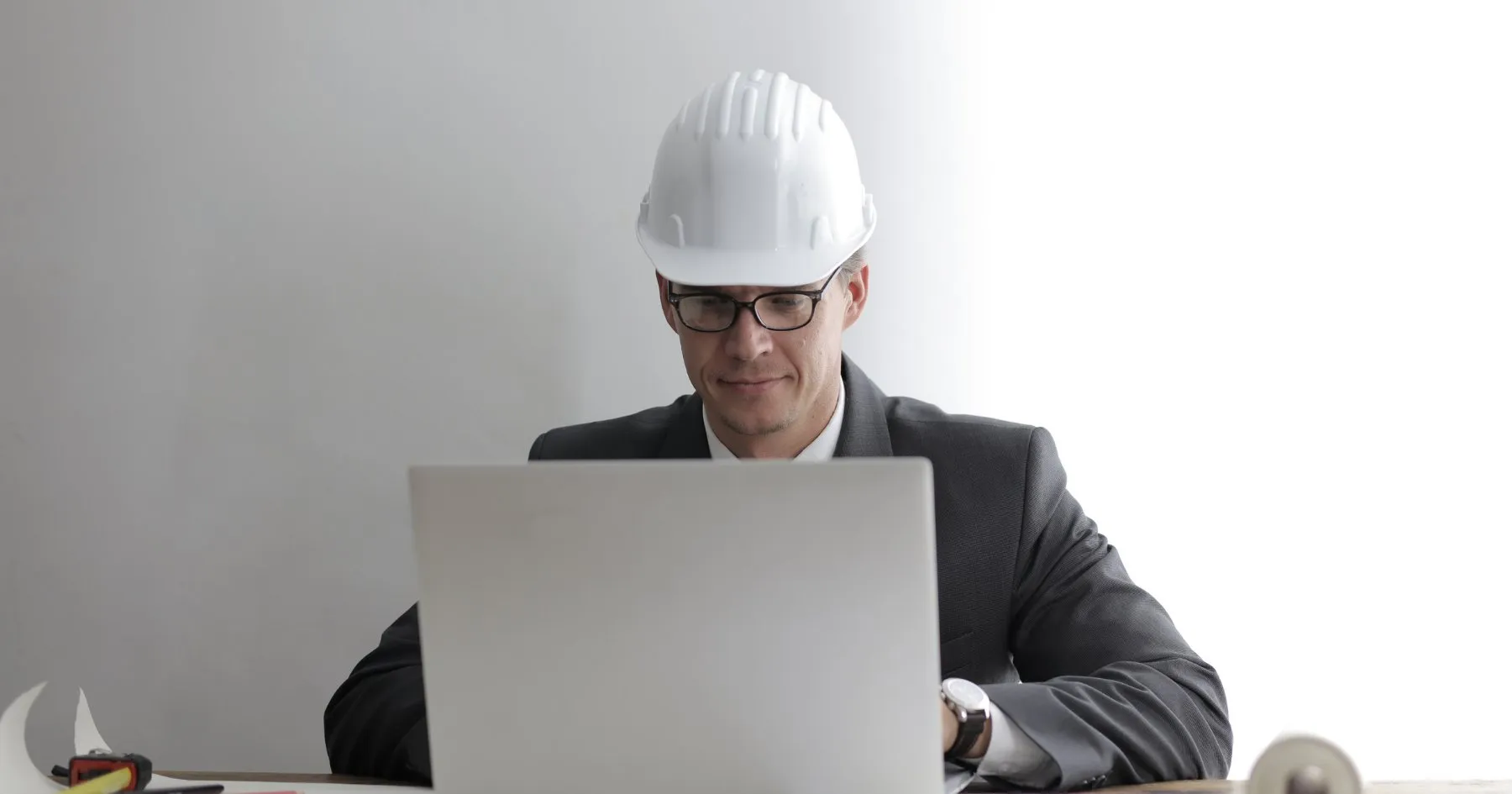
Jonas has four days left. By Friday, the material decision for a new valve housing has to be made, including a justification that will stand up in front of the customer. On Monday morning, his search for studies and test reports on the corrosion resistance of duplex stainless steels under fluctuating chloride exposure returns more than 200 hits: journal articles, patents and internal test reports from three earlier projects. By Monday evening, he has skimmed the abstracts of perhaps thirty of them.
This is what research in industry looks like in practice. Not an academic exercise, but a bottleneck before every design approval, every check against a requirements specification, every patent application. And the bottleneck is getting tighter: as early as 2022, around 5.14 million scientific articles were published worldwide according to WordsRated, and the number is rising. On top of that come patent specifications, standards, internal test reports and supplier documentation that are not in any public database.
Anyone who thinks this is a problem for university research departments underestimates how much classic literature work goes into design, quality assurance and product development today. The only difference: engineers do not have six months for a systematic review. They usually only have until Friday.
Why research becomes the bottleneck
The problem is not new; it has simply become more acute. According to a CADENAS study in which more than 100,000 engineers and designers were surveyed, almost half of them spend at least one hour a day just searching for suitable components. Across all knowledge workers, the Coveo Workplace Relevance Report 2022 puts the time spent searching for information at an average of 3.6 hours per day. That is an increase of one hour compared with the previous year. And according to Atlassian’s “State of Teams” study, cited by Papershift, 56% of respondents regularly have to ask colleagues or set up a meeting because they cannot find the information they need themselves.
For a classic systematic literature review, which would actually be standard in research and development, the methodology alone takes between six and eighteen months according to Tulane University. Screening abstracts, checking full texts, cross-referencing, documenting exclusion criteria. No project plan in mechanical engineering allows time for that. So people take shortcuts: they read what they can manage in the time available, ask the colleague who “knows about this” and hope that the most important source is not among the remaining hits nobody has looked at.
The risk here is not abstract. An overlooked publication on a failure mechanism, a patent that already covers the planned solution, a test report from an earlier project that warned against exactly this material. In the worst case, all of this costs not just time but a rework loop, a failed component or a patent infringement lawsuit.
From 200 papers to an answer in minutes: how it works in practice
The approach we built MAIA around reverses the order. Instead of loading documents only once a question is asked, MAIA analyses the entire collection in advance, before any question has even been raised. The platform recognises entities, technical terms, relationships between documents and version states, and uses them to build an index that knows a test report has to be read differently from a patent claim, even if both are PDFs.
In concrete terms, this is how it would work for Jonas: instead of opening the 200 hits one by one, he uploads all of them – journal articles, patents, internal reports – to MAIA at once. MAIA analyses the entire collection in the background. Jonas then asks his actual question in plain language: “Which duplex stainless steels show no pitting corrosion under fluctuating chloride exposure over 5,000 operating hours, and are there internal test reports that contradict this?” The answer does not come as a vague summary but with a reference to source, page and document version. Verifiable, not just plausible.
In this way, more than 200 hits become a reliable, source-backed answer within a few minutes. Not because the underlying language model is smarter than ChatGPT’s, but because MAIA has already done the groundwork before the first question was asked.
Where AI-assisted research in engineering has the biggest impact
In practice, this need arises at several points in the product development process, not only in classic literature research:
Material and technology selection. Before a design decision is made, all relevant publications, patents and internal test series on a material or process should be taken into account. Not just the ones the responsible engineer happens to know.
Checking specifications and standards. Checking a requirements specification with hundreds of requirements against internal documentation and applicable standards takes days when done manually. With an AI that searches both worlds of documents at the same time, this becomes an auditable overview in minutes instead of days.
Patent and competitor research. Before development resources go into a solution, it is worth checking whether it is already patented or whether a competitor has long listed it in a datasheet. Across hundreds of patent specifications and product datasheets, this is a search that people can hardly do manually any more.
Root cause analysis across past projects. Why was a particular solution rejected three years ago? Which workaround worked for the customer in Brazil? This knowledge rarely sits in a neatly maintained wiki. It is spread across project folders, emails and test reports, which an AI that understands documents can cross-reference, but a person hardly can.
What to look for when choosing a research tool
Traceability down to page and version. In industry, an answer without a source reference is worthless because it cannot be audited. Insist that every statement can be traced back to the original document.
Understanding of document types. A tool that treats a bill of materials like running text will reach its limits with technical documentation. Good systems distinguish between standards, test reports, patents and design drawings.
Scaling beyond the context window. Ask specifically how many documents the tool can process at the same time, not just how quickly it answers a question about a single file.
Data location and confidentiality. Material data, design details and unpublished research results are among the most sensitive information an industrial company has. A tool that uses this data to train further models should not be considered for this purpose.
How MAIA solves this task
This is exactly the problem we built MAIA for. Before you ask the first question, MAIA analyses all uploaded papers, patents, standards and internal documents in depth, recognising connections across hundreds of documents that would be lost in manual reading. High Precision Mode breaks every answer down into individual statements and checks each one against the original source before it is output – traceable down to page and document version. And because MAIA is operated in Germany and Switzerland, your research results and internal reports stay where they belong: with you. Your data is not used for training.
For engineers like Jonas, this ultimately means: 200 search hits do not turn into a week of lost time, but into a reliable answer worked out with MAIA by Monday afternoon – with enough time to double-check it before Friday.
If you would like to see how this looks with your own technical documentation: book an intro call.